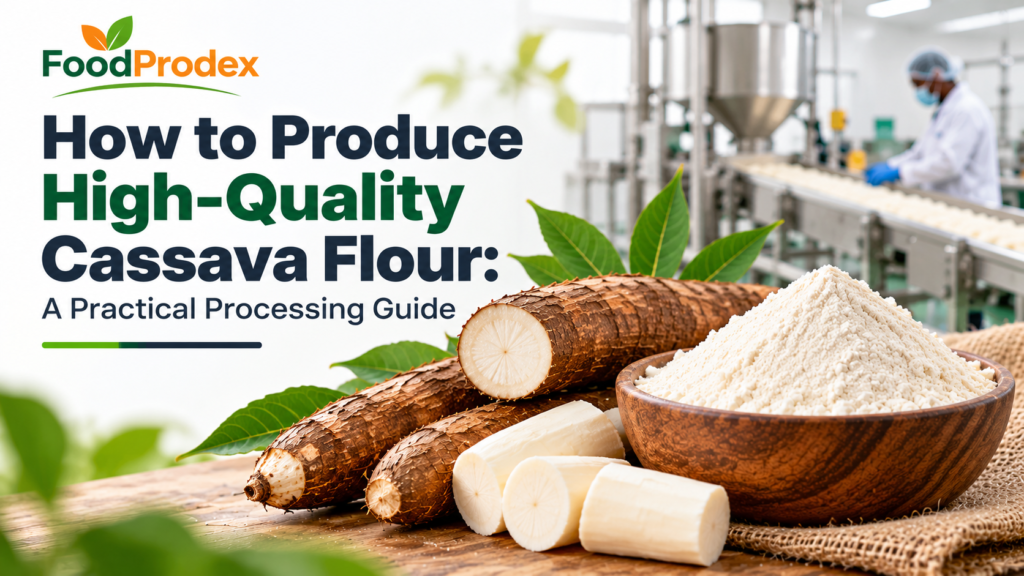
Cassava flour is a versatile food ingredient used in homes, bakeries and food-processing businesses. Producing high-quality cassava flour requires careful handling from the selection of fresh roots through peeling, washing, processing, drying, milling and packaging. Good processing practices help produce flour with a clean colour, fine texture, pleasant aroma and better storage stability. This guide explains the practical steps for producing quality cassava flour suitable for household and commercial food applications.
1. Selecting Fresh Cassava Roots
The quality of cassava flour begins with the roots. Use fresh, mature cassava roots that are firm and free from rot, mould, severe bruising or insect damage. Roots should be processed as soon as possible after harvesting because prolonged storage can cause deterioration, discoloration and off-flavours. Selecting clean and healthy roots helps improve the colour, taste and overall quality of the finished flour.
2. Peeling and Washing the Cassava Roots
Peel the cassava roots carefully to remove the outer brown skin and the inner pinkish layer. After peeling, wash the roots thoroughly with clean potable water to remove soil, sand and other contaminants. Proper washing is important because dirt left on the roots can affect the colour, taste and cleanliness of the finished flour. Use clean equipment and hygienic handling throughout this stage
3. Grating or Chipping the Cassava
After washing, reduce the cassava roots into smaller pieces to speed up moisture removal and improve processing. The roots may be grated into a mash or cut into thin, uniform chips using clean food-processing equipment. Grated cassava should be dewatered promptly, while chips should be kept thin and evenly sized so they can dry quickly and uniformly. Good hygiene at this stage helps prevent contamination and discoloration.
4. Dewatering and Drying
For grated cassava, remove excess water by pressing the mash in clean food-grade bags or suitable dewatering equipment. Break up the pressed cake into small particles before drying. Spread the material in a thin, even layer and dry it promptly using a hygienic solar, cabinet or mechanical dryer. Drying should continue until the cassava is sufficiently dry and crisp for milling, with final moisture preferably around 10–12% or lower for good storage stability. Avoid excessive heat that may darken the flour or create an undesirable cooked flavour.
5. Milling and Sieving
Once the cassava is completely dry, allow it to cool before milling. Grind the dried cassava into a fine flour using a clean hammer mill, plate mill or other suitable food-grade milling equipment. After milling, sieve the flour to remove coarse particles and obtain a smooth, uniform texture. If a finer product is required, the coarse fraction can be milled again and re-sieved.
6. Packaging and Storage
After milling and sieving, allow the flour to cool completely before packaging. Pack it in clean, dry, food-grade moisture-barrier bags or containers and seal them properly to protect the flour from humidity, insects and contamination. Store the packaged flour in a cool, dry place away from direct sunlight, chemicals and strong odours. Proper packaging and storage help preserve the flour’s colour, flavour and shelf stability.
7. Quality Control and Food Safety
Quality control should be maintained throughout the entire production process. Use clean water, hygienic equipment and good handling practices at every stage. Check the finished flour for colour, odour, texture and signs of moisture or contamination before packaging. For commercial production, it is also important to follow applicable food-safety standards, keep production records and carry out appropriate laboratory testing where required.
Conclusion
Producing high-quality cassava flour depends on careful raw-material selection, hygienic processing, effective drying, proper milling and good packaging. When each stage is controlled properly, the result is a clean, fine and stable flour suitable for household use and a wide range of food-processing applications. Consistency, cleanliness and moisture control are among the most important factors in producing a reliable cassava flour product.
Learn more about FoodProdex and our commitment to quality food processing and product development.