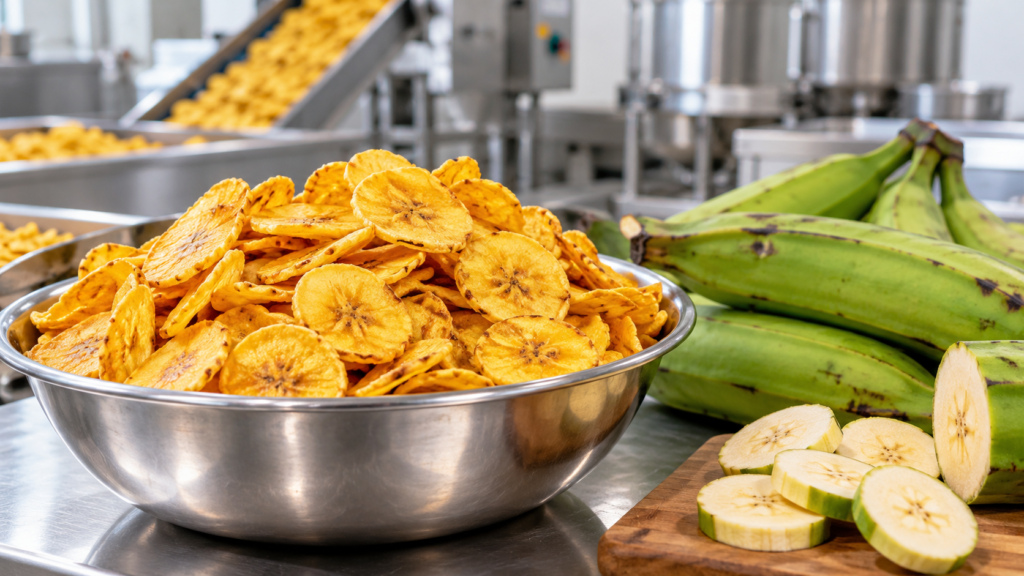
Plantain chips are a popular snack made from carefully selected plantains that are peeled, sliced, fried or baked, seasoned and packaged. Producing high-quality plantain chips requires good raw materials, uniform slicing, proper frying temperature, effective oil drainage and moisture-resistant packaging. Each stage affects the colour, crispness, flavour, oil content and shelf stability of the finished product. This guide explains the practical steps for producing clean, crisp and good-quality plantain chips suitable for household consumption and commercial production.
1. Selecting Good-Quality Plantains
The quality of plantain chips begins with the plantains used. Choose firm, mature plantains that are free from rot, mould, insect damage and severe bruising. For crisp chips, plantains that are mature but not overly ripe are usually preferred because very soft or overripe fruits may produce darker, sweeter and less crisp chips. Use clean, sound plantains and process them promptly for the best colour, texture and flavour.
2. Peeling and Washing the Plantains
Wash the plantains thoroughly before peeling to remove dirt and surface contamination. Peel carefully with a clean knife, taking care not to damage the flesh excessively. After peeling, rinse the plantains with clean potable water if necessary and keep them in a clean container. Good hygiene at this stage helps prevent contamination and supports a cleaner, better-quality finished product.
3. Slicing the Plantains Uniformly
Slice the peeled plantains into thin, even pieces using a clean knife or slicer. Uniform thickness is important because it helps the chips cook at the same rate and develop a consistent crisp texture. Slices that are too thick may remain soft inside, while extremely thin slices can burn quickly. Keep the sliced plantains clean and process them promptly to reduce discoloration.
4. Frying the Plantain Slices
Heat clean, good-quality frying oil to a stable frying temperature, usually around 160–175°C. Add the plantain slices in small batches so the oil temperature does not drop too much. Fry while gently stirring or turning the slices until they are evenly cooked, crisp and light golden in colour. Avoid overcrowding the fryer because this can lead to uneven cooking and excessive oil absorption. Replace degraded frying oil when it becomes dark, foamy or develops an off-odour.
5. Draining and Seasoning the Chips
Remove the fried plantain chips from the oil and allow excess oil to drain using a clean perforated tray, basket or food-grade absorbent material. Season the chips while they are still warm so the seasoning adheres evenly. Use measured quantities of salt, spices or other approved seasonings to maintain consistent flavour from batch to batch. Avoid excessive seasoning, which can overpower the natural plantain taste or affect product quality.
6. Cooling the Plantain Chips
After frying and seasoning, spread the chips in a thin layer on clean trays and allow them to cool completely before packaging. Packaging while the chips are still warm can trap moisture and reduce crispness. The cooling area should be clean, dry and protected from dust, insects and other sources of contamination. Proper cooling helps preserve texture and improves the shelf stability of the finished product.
7. Packaging and Storage
Pack the completely cooled plantain chips in clean, dry, food-grade moisture-resistant packaging and seal properly to protect them from air, humidity and contamination. Good packaging helps preserve crispness and flavour while reducing the risk of rancidity and moisture absorption. Store the finished product in a cool, dry place away from direct sunlight, heat, chemicals and strong odours.
8. Quality Control and Food Safety
Maintain good hygiene throughout production by using clean water, food-grade equipment and proper handling practices. Check the finished chips for colour, crispness, flavour, oiliness and signs of moisture or contamination. For commercial production, monitor frying oil quality, keep production records and follow applicable food-safety and labelling requirements. Consistent quality control helps produce a safer and more reliable product.
Conclusion
Producing high-quality plantain chips depends on good raw materials, uniform slicing, controlled frying, proper oil drainage, careful seasoning, complete cooling and effective packaging. When each stage is handled correctly, the result is crisp, attractive and good-tasting chips with better storage stability. Consistency, hygiene and moisture control are essential for producing a reliable product for both household and commercial use.
Learn more about FoodProdex and our work in food processing, product development and quality improvement.