
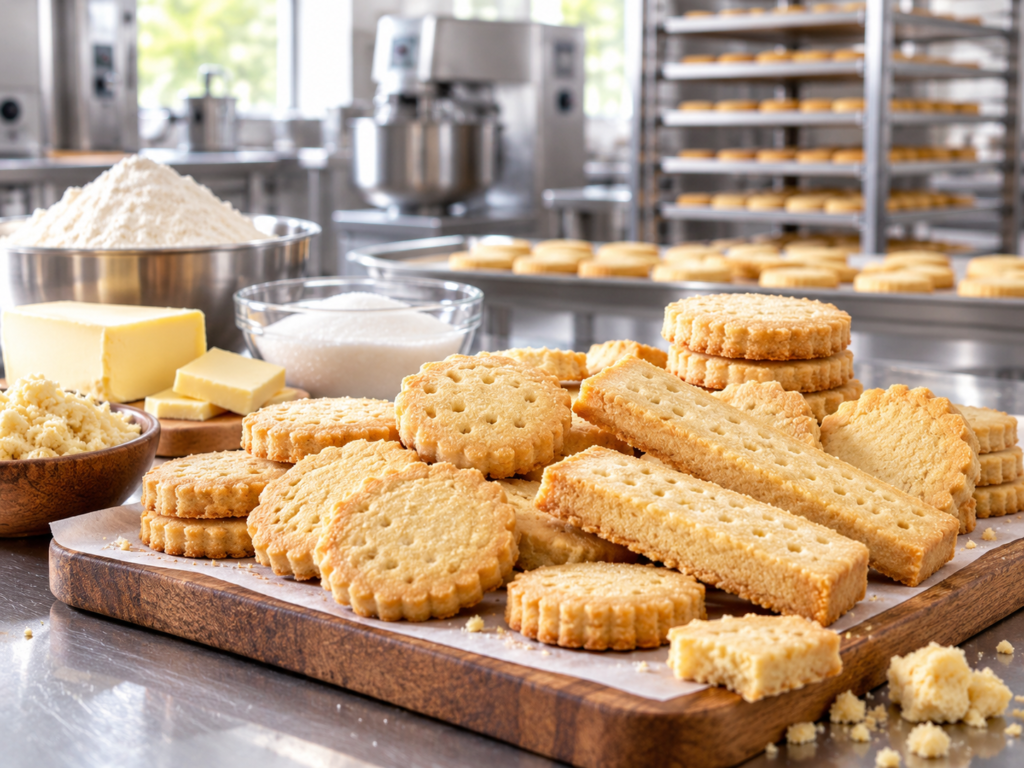
Shortbread biscuits are rich, crisp baked products made mainly from flour, fat and sugar. Producing high-quality shortbread requires careful ingredient selection, accurate mixing, controlled dough consistency, proper moulding or shaping, suitable baking conditions and effective packaging. Each stage affects the biscuit’s texture, colour, flavour, spread and shelf stability. This guide explains the practical steps for producing clean, crisp and good-quality shortbread biscuits suitable for household consumption and commercial production.
1. Selecting and Measuring the Ingredients
The quality of shortbread biscuits begins with the ingredients used. Select good-quality flour, bakery fat or butter, sugar and any approved flavouring ingredients. Measure all ingredients accurately to maintain consistent texture, taste and spread from batch to batch. Flour should be clean and free from insects or foreign materials, while fats should be fresh and free from rancid odours. Accurate weighing is especially important in commercial production because small formulation changes can affect dough handling and the final biscuit quality.
2. Creaming the Fat and Sugar
Place the measured fat and sugar in the mixer and cream them until the mixture becomes smooth and evenly blended. Proper creaming helps distribute the sugar and fat throughout the dough and contributes to a tender, consistent texture. Avoid excessive mixing, which can incorporate too much air and affect biscuit shape or spread during baking. For commercial production, use a consistent mixing time and speed from batch to batch.
3. Adding the Dry Ingredients
Sift the flour and any other dry ingredients before adding them to the creamed mixture. Add them gradually and mix only until a uniform dough forms. Overmixing can develop too much gluten and make the biscuits tougher, while undermixing may cause uneven texture or weak dough structure. The finished dough should be smooth, workable and suitable for shaping or moulding without excessive cracking or stickiness.
4. Shaping or Moulding the Dough
Shape the dough into uniform portions using a rotary moulder, cutter, piping system or other suitable equipment. Keep the biscuit thickness and weight as consistent as possible so the pieces bake evenly. If the dough cracks, tears or sticks during moulding, check the dough moisture, fat balance and mixing conditions before continuing. Uniform shaping improves both product appearance and baking consistency.
5. Baking the Shortbread Biscuits
Bake the shaped biscuits in a properly preheated oven at a controlled temperature suitable for the product size and thickness. The goal is to achieve even baking, a light golden colour and a crisp texture without excessive browning. Avoid very high heat, which can darken the surface before the centre is fully dried. For commercial production, keep oven temperature, baking time and tray loading consistent from batch to batch.
6. Cooling the Biscuits
After baking, remove the biscuits from the oven and allow them to cool completely on clean trays or cooling racks before packaging. Proper cooling allows the biscuit structure to set and helps excess heat and moisture escape. Packaging while the biscuits are still warm can cause condensation, soften the texture and shorten shelf life. Keep the cooling area clean, dry and protected from dust, insects and other contamination.
7. Packaging and Storage
Pack the completely cooled shortbread biscuits in clean, dry, food-grade moisture-resistant packaging and seal properly to protect them from air, humidity and contamination. Good packaging helps maintain crispness, flavour and freshness while reducing the risk of moisture absorption and breakage. Store the finished biscuits in a cool, dry place away from direct sunlight, heat, chemicals and strong odours.
8. Quality Control and Food Safety
Maintain good hygiene throughout production by using clean equipment, food-grade contact surfaces and proper handling practices. Check the finished biscuits for colour, crispness, flavour, shape, breakage and signs of moisture or contamination. For commercial production, keep batch records, monitor ingredient quality and follow applicable food-safety and labelling requirements. Consistent quality control helps produce a safer and more reliable product.Conclusion
Conclusion
Producing high-quality shortbread biscuits depends on accurate formulation, proper mixing, controlled dough consistency, uniform shaping, correct baking, complete cooling and effective packaging. When each stage is carefully controlled, the result is crisp, attractive and good-tasting shortbread with better storage stability. Consistency, hygiene and moisture control are essential for producing a reliable product for both household and commercial use.**
Learn more about FoodProdex and our work in food processing, product development and quality improvement.