
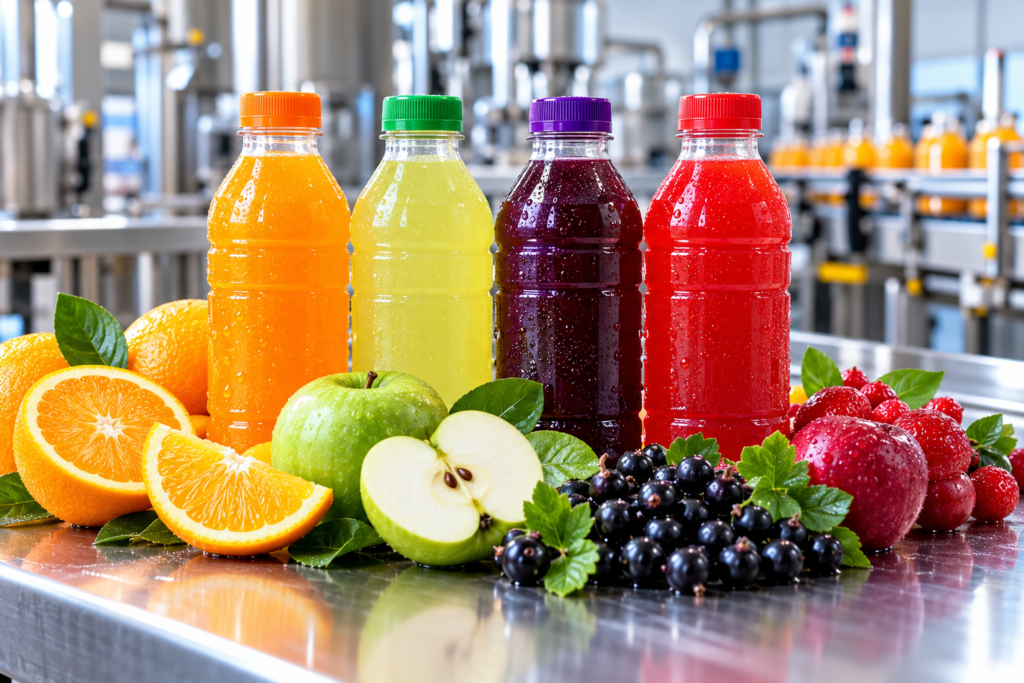
Fruit drinks are refreshing beverages produced from fruit juice, concentrates, flavours, sweeteners, water and other permitted ingredients. Producing high-quality fruit drinks requires careful ingredient selection, hygienic water treatment, accurate formulation, proper mixing and effective preservation or heat processing. Each stage affects the drink’s flavour, colour, clarity, acidity, stability and shelf life. This guide explains the practical steps for producing clean, consistent and good-quality fruit drinks suitable for household consumption and commercial production.
1. Selecting Ingredients and Preparing Water
The quality of a fruit drink begins with the ingredients and water used. Select good-quality fruit juice, concentrate or approved flavouring materials that are fresh and free from spoilage or contamination. Use potable water that is suitable for beverage production and, where necessary, filter or treat it before use. Sugar, acids, stabilizers, colours and other permitted ingredients should be accurately weighed according to the formulation. Clean ingredients and properly treated water help improve flavour, appearance, product consistency and safety.
2. Preparing the Sugar and Stabilizer Base
Measure the required quantity of sugar and dissolve it thoroughly in part of the production water. If a stabilizer such as CMC is used, disperse it properly to prevent lumps and uneven viscosity. Dry blending the stabilizer with part of the sugar before adding it gradually to water can help improve dispersion. Mix until the base becomes smooth and uniform. Proper preparation of the sugar and stabilizer system helps provide consistent sweetness, mouthfeel and product stability.
3. Adding Acids, Flavour and Other Ingredients
After the sugar and stabilizer base is properly mixed, add the required food acids, flavours, juice concentrates, colours and other permitted ingredients according to the formulation. Add ingredients gradually while mixing to achieve even distribution throughout the drink. Check the acidity and taste during formulation because excessive acid can make the drink too sharp, while insufficient acid may produce a flat taste and reduce microbiological stability. Maintain accurate measurements and consistent mixing procedures from batch to batch.
4. Adjusting Acidity and Product Balance
Measure the drink’s acidity or pH using a properly calibrated pH meter and adjust carefully according to the product specification. Acidity influences flavour, microbial stability and preservative effectiveness. Make small adjustments gradually and mix thoroughly before rechecking. The final drink should have a balanced taste without being excessively sour or flat.
5. Mixing and Homogenizing the Drink
Continue mixing until all ingredients are completely and evenly dispersed. If the formulation contains clouding agents, stabilizers or juice solids, proper mixing helps prevent separation and improves uniform appearance. Avoid excessive aeration because trapped air can encourage foaming and reduce filling efficiency. The finished beverage should have consistent colour, flavour and body throughout the batch.
6. Preservation or Heat Treatment
To improve shelf stability, use an appropriate preservation method suitable for the formulation and packaging system. This may involve heat treatment such as pasteurization or hot filling, or the controlled use of permitted preservatives according to applicable food regulations. Time, temperature, acidity and hygiene must be properly controlled because preservation cannot compensate for poor sanitation.
7. Filling and Packaging
Fill the finished fruit drink into clean, food-grade bottles or other suitable containers using hygienic equipment. Containers should be properly cleaned and, where required, sanitized before filling. Seal immediately after filling to reduce contamination and protect product quality. Use packaging that is suitable for the selected preservation method and capable of maintaining product stability during storage and distribution.
8. Quality Control and Food Safety
Maintain good hygiene throughout production by using clean water, sanitized equipment and proper handling practices. Check the finished drink for colour, flavour, aroma, acidity, appearance, fill volume and signs of separation or contamination. For commercial production, keep batch records, follow applicable food-safety and labelling requirements, and carry out appropriate laboratory testing where necessary. Consistent quality control helps produce a safer and more reliable beverage.
Conclusion
Producing high-quality fruit drinks depends on good ingredients, treated water, accurate formulation, controlled acidity, proper mixing, suitable preservation and hygienic packaging. When each stage is carefully controlled, the result is a refreshing, consistent and stable beverage with better flavour, appearance and shelf performance. Good manufacturing practices, accurate measurements and effective quality control are essential for both household and commercial production.**
Learn more about FoodProdex and our work in food processing, product development and quality improvement.