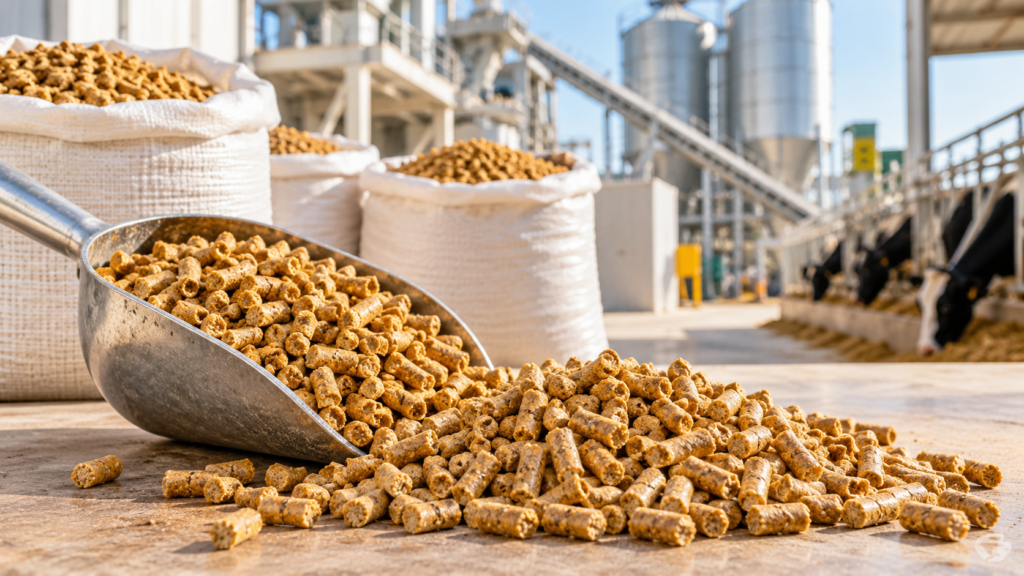
Animal feed pellets are compact feeds produced by combining properly selected ingredients, grinding them to a suitable particle size, mixing them uniformly and pressing the mixture through a pellet mill. Producing high-quality feed pellets requires accurate formulation, clean raw materials, proper grinding, thorough mixing, controlled moisture and temperature, effective pelleting, cooling and hygienic packaging. Each stage affects pellet strength, nutritional consistency, storage stability and animal performance. This guide explains the practical steps for producing clean, uniform and good-quality animal feed pellets for commercial feed production.
1. Selecting and Inspecting Raw Materials
High-quality feed pellets begin with good raw materials. Select clean grains, protein sources, mineral ingredients and other approved feed materials that are free from mould, insects, rancid odours and foreign matter. Inspect ingredients before use because poor-quality raw materials can reduce feed value, pellet quality and storage stability. Store ingredients in a clean, dry and well-ventilated area to help prevent moisture damage and contamination.
2. Formulating the Feed
Prepare the feed formula according to the nutritional requirements of the intended animal and production stage. Weigh each ingredient accurately so the finished feed provides consistent energy, protein, minerals and other nutrients from batch to batch. Avoid changing ingredient quantities without proper formulation because small adjustments can significantly affect nutrient balance. For commercial production, use documented formulas and maintain accurate batch records.
3. Grinding the Ingredients
Grind the major ingredients to a suitable and reasonably uniform particle size before mixing. Proper grinding improves ingredient distribution and helps the feed pass more consistently through the pellet mill. Material that is too coarse may produce weak or uneven pellets, while excessive fine grinding can increase dust and processing difficulty. Keep the grinder clean and check screens regularly to maintain consistent particle size.
4. Mixing the Feed Uniformly
Transfer the ground ingredients into a clean feed mixer and mix thoroughly until all components are evenly distributed. Add smaller ingredients such as premixes, minerals and other micro-ingredients carefully to prevent uneven concentration. Liquid ingredients, where used, should be added gradually during mixing. Proper mixing is essential because each portion of the finished feed should contain a similar nutrient composition.
5. Conditioning the Feed
Before pelleting, adjust the feed mixture to the appropriate moisture and temperature for effective pellet formation. Where steam conditioning is used, apply it evenly so the material becomes more pliable and easier to compress through the die. Proper conditioning can improve pellet durability and production efficiency. Avoid excessive moisture or heat, which may reduce feed quality or create storage problems.
6. Pelleting the Feed
Feed the conditioned mixture into a clean pellet mill and allow it to pass through the selected die. Choose a pellet diameter suitable for the intended animal and production stage. Maintain consistent feed flow and operating conditions to produce pellets with uniform size and density. Monitor the mill for blockage, overheating or irregular pellet formation and correct problems promptly.
7. Cooling and Screening
Fresh pellets leaving the mill are usually warm and may contain excess moisture. Spread or pass them through a suitable cooler until they reach a safe temperature and moisture level for storage. After cooling, screen the pellets to remove excess fines and broken pieces. Proper cooling and screening help improve pellet strength, reduce spoilage risk and produce a cleaner finished product.
8. Packaging and Quality Control
Pack the cooled pellets in clean, dry, feed-grade bags and seal them properly to protect the product from moisture, pests and contamination. Check finished pellets for size, durability, colour, odour, moisture and signs of mould or spoilage. For commercial production, keep batch records, label products correctly and carry out appropriate nutrient and safety testing where required. Consistent quality control helps produce a safer and more reliable animal feed.
Conclusion
Producing high-quality animal feed pellets depends on good raw materials, accurate formulation, proper grinding, uniform mixing, controlled conditioning, effective pelleting, cooling and hygienic packaging. When each stage is carefully managed, the result is a more consistent, durable and stable feed product. Good manufacturing practices, proper storage and regular quality control are essential for reliable commercial feed production.
Learn more about FoodProdex and our work in food processing, feed development and product quality improvement.