
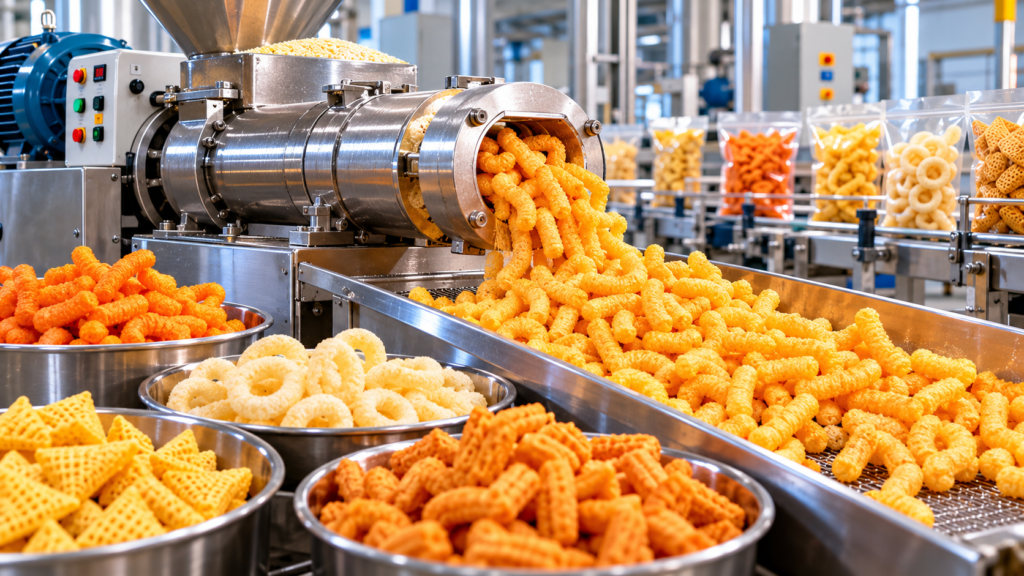
Extruded snacks are light, crisp snack products made by forcing a prepared cereal or starch-based mixture through an extruder under controlled heat, pressure and moisture. Producing high-quality extruded snacks requires careful raw material selection, proper formulation, uniform grinding, controlled moisture adjustment, suitable extrusion conditions and effective drying or seasoning. Each stage affects expansion, texture, colour, flavour, crispness and shelf stability. This guide explains the practical steps for producing clean, consistent and good-quality extruded snacks suitable for household and commercial production.
1. Selecting and Preparing Raw Materials
High-quality extruded snacks begin with good raw materials. Select clean cereal flours, starches or other suitable ingredients that are free from mould, insects, foreign matter and off-odours. The raw materials should have consistent quality and suitable moisture content for processing. Remove impurities before use and store ingredients in a clean, dry environment to reduce contamination and quality deterioration.
2. Formulating the Snack Mix
Prepare the formulation according to the desired snack texture, flavour and expansion characteristics. Weigh all ingredients accurately, including cereal flour, starch, salt, seasonings and any other permitted components. Maintain consistent ingredient ratios from batch to batch because small formulation changes can affect expansion, density and crispness. For commercial production, keep written formulas and batch records to support product consistency.
3. Grinding and Mixing the Ingredients
Grind coarse ingredients to a suitable and reasonably uniform particle size before mixing. Transfer the ingredients into a clean mixer and blend thoroughly until the mixture is uniform. Proper mixing helps distribute starches, seasonings and other ingredients evenly throughout the batch. Avoid excessive lumps or uneven particle size because these can affect material flow through the extruder and lead to inconsistent snack shape, texture and expansion.
4. Adjusting Moisture Before Extrusion
Add the required amount of clean water gradually to the mixed ingredients while blending continuously. The goal is to achieve a uniform moisture level suitable for extrusion without creating wet lumps or dry pockets. Proper moisture adjustment helps improve material flow, expansion and texture during processing. Allow the conditioned mixture to rest briefly if necessary so the moisture can distribute evenly throughout the batch.
5. Extruding the Snack
Feed the prepared mixture into a clean extruder and operate the machine under controlled temperature, pressure and feed conditions. Select a die suitable for the desired snack shape and size. Maintain steady feeding because irregular flow can produce uneven expansion, density or shape. Monitor the extrudate continuously and adjust operating conditions when necessary to achieve a light, crisp and uniform product.
6. Drying and Cooling the Extruded Snacks
After extrusion, dry the snacks if necessary to remove excess moisture and develop a crisp texture. Use a clean dryer or suitable food-grade drying system and avoid excessive heat that may darken or burn the product. After drying, allow the snacks to cool completely before seasoning or packaging. Proper drying and cooling help improve crispness, reduce moisture-related spoilage and support better shelf stability.
7. Seasoning and Flavour Application
Apply seasoning only after the extruded snacks have been properly dried and cooled to the appropriate condition. Use measured quantities of salt, spices, flavour powders or other approved seasonings and distribute them evenly using a clean tumbler, mixer or similar equipment. If oil is used to help seasoning adhere, apply it carefully and consistently. Excessive oil or seasoning can make the snacks greasy, overpower the flavour and reduce storage stability.
8. Packaging and Quality Control
Pack the completely cooled snacks in clean, dry, food-grade moisture-resistant packaging and seal properly to protect them from air, humidity and contamination. Check the finished product for colour, flavour, expansion, crispness, shape, oiliness and signs of moisture or spoilage. For commercial production, keep batch records, follow applicable food-safety and labelling requirements, and carry out appropriate quality testing where necessary.
Conclusion
Producing high-quality extruded snacks depends on good raw materials, accurate formulation, proper grinding and mixing, controlled moisture, stable extrusion conditions, effective drying, careful seasoning and suitable packaging. When each stage is well controlled, the result is a light, crisp and consistent snack with better flavour and storage stability. Good manufacturing practices, accurate processing conditions and regular quality control are essential for reliable commercial production.
Learn more about FoodProdex and our work in food processing, product development and quality improvement.