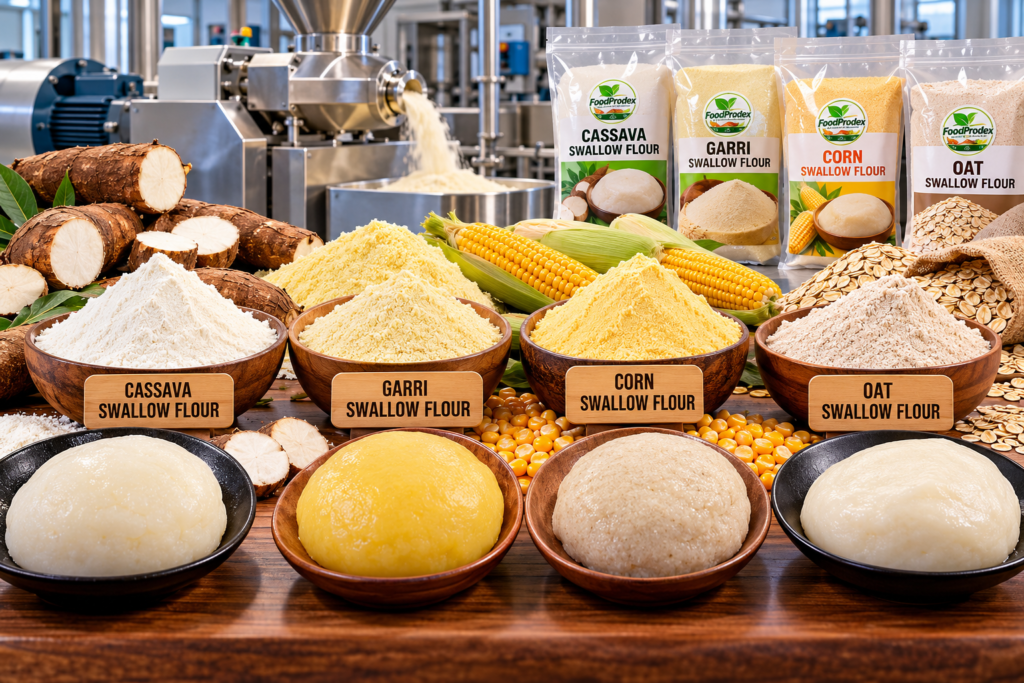
Swallow flour is a finely milled food product prepared from suitable crops such as cassava, maize, oats, plantain or other starch-rich materials and cooked into a smooth dough-like meal. Producing high-quality swallow flour requires careful raw material selection, proper cleaning, effective drying, fine milling, sieving and hygienic packaging. Each stage affects colour, texture, flavour, cooking performance and shelf stability. This guide explains the practical steps for producing clean, smooth and good-quality swallow flour suitable for household use and commercial production.
1. Selecting and Inspecting Raw Materials
The quality of swallow flour begins with the raw materials used. Select clean, mature and sound materials that are free from mould, insect damage, rot, foreign matter and unpleasant odours. Remove stones, dirt, damaged pieces and other impurities before processing. Good-quality raw materials help improve the colour, flavour, texture and overall consistency of the finished flour.
2. Cleaning and Preparing the Raw Materials
Wash or clean the selected raw materials thoroughly using a method suitable for the particular crop. Where peeling is required, remove unwanted outer layers carefully and trim away damaged portions. Cut or reduce the material into smaller pieces where necessary to support faster and more uniform drying. Maintain good hygiene during preparation to reduce contamination and improve final product quality.
3. Drying the Prepared Material
Dry the prepared raw material thoroughly using a clean, suitable drying method such as a food-grade dehydrator, cabinet dryer or other controlled system. Spread the material evenly so moisture is removed as uniformly as possible. Inadequate drying can encourage spoilage and reduce shelf stability, while excessive heat may darken the product or affect flavour. The material should be sufficiently dry before mi
4. Milling the Dried Material
Once the dried material has cooled completely, mill it into a fine flour using clean food-grade milling equipment. Proper milling helps produce a smooth texture and improves the cooking quality of the finished swallow flour. If the flour is still coarse after the first pass, re-mill it until the desired fineness is achieved. Keep the milling equipment clean and dry to prevent contamination and moisture pickup.
5. Sieving and Particle Size Control
Pass the milled flour through a clean, fine sieve to remove coarse particles and improve uniformity. Re-mill any larger particles that remain and sieve again until the desired smoothness is achieved. Consistent particle size helps the flour cook more evenly and produces a smoother swallow texture. Keep the sieving equipment clean and dry throughout the process.
6. Cooling and Moisture Control
Allow the flour to cool completely before packaging, especially if any heat was generated during milling. Make sure the flour is dry and free-flowing, with no signs of dampness or clumping. Excess moisture can reduce shelf life and encourage mould growth. Good moisture control helps maintain product stability, texture and overall quality during storage.
7. Packaging and Storage
Pack the finished swallow flour in clean, dry, food-grade moisture-resistant bags or containers and seal properly. Good packaging helps protect the flour from humidity, insects, dust and contamination. Store the packaged product in a cool, dry place away from direct sunlight, heat, chemicals and strong odours. Proper storage helps maintain freshness and cooking quality.
8. Quality Control and Food Safety
Maintain good hygiene throughout production by using clean equipment, food-grade contact surfaces and proper handling practices. Check the finished flour for colour, aroma, fineness, moisture, smoothness and signs of contamination. For commercial production, keep batch records, follow applicable food-safety and labelling requirements, and carry out appropriate laboratory testing where necessary.
Conclusion
Producing high-quality swallow flour depends on good raw materials, proper cleaning and preparation, effective drying, fine milling, uniform sieving, moisture control and hygienic packaging. When each stage is carefully managed, the result is a smooth, clean and stable flour with good cooking performance and better storage quality. Consistency, hygiene and proper moisture management are essential for reliable household and commercial production.
Learn more about FoodProdex and our work in food processing, product development and quality improvement.