
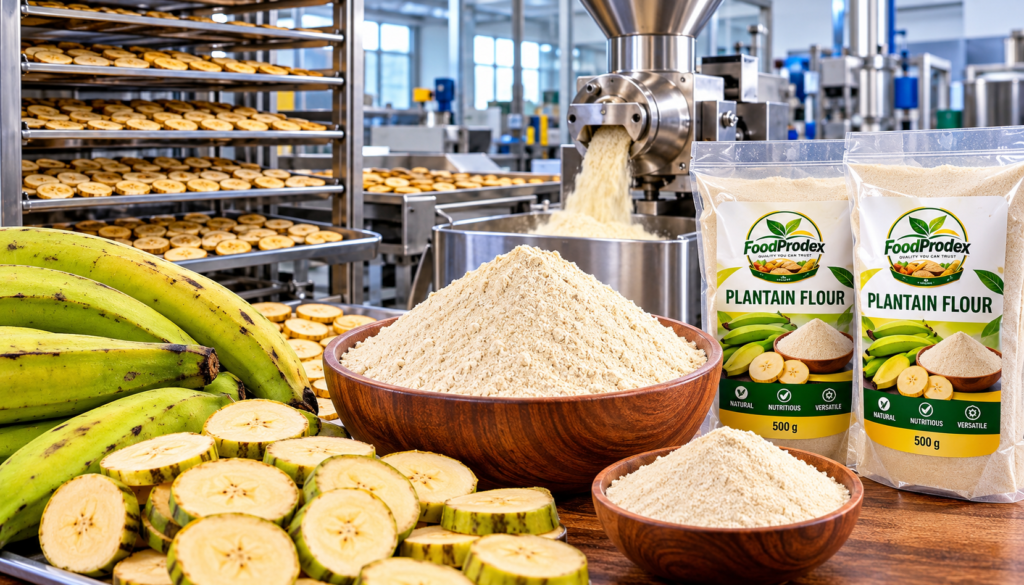
Plantain flour is a fine food powder produced from peeled, sliced, dried and milled plantains. Producing high-quality plantain flour requires careful selection of sound plantains, hygienic preparation, uniform slicing, effective drying, fine milling and proper packaging. Each stage affects the flour’s colour, flavour, texture, moisture level, cooking performance and shelf stability. This guide explains the practical steps for producing clean, smooth and good-quality plantain flour suitable for household use and commercial production.
1. Selecting Good-Quality Plantains
Begin with firm, mature plantains that are free from rot, mould, insect damage and severe bruising. For flour production, plantains that are mature but not overly ripe are generally preferred because excessive ripeness can increase sweetness, darkening and stickiness during processing. Use clean, sound fruits and process them promptly to help maintain good colour, flavour and flour quality.
2. Peeling and Washing the Plantains
Wash the plantains thoroughly before peeling to remove dirt and surface contamination. Peel carefully with a clean knife and remove any damaged or discoloured portions. Rinse the peeled plantains with clean potable water where necessary and keep them in clean food-grade containers. Good hygiene at this stage helps reduce contamination and supports better product quality.
3. Slicing the Plantains Uniformly
Slice the peeled plantains into thin, even pieces using a clean knife, slicer or suitable food-processing equipment. Uniform thickness is important because it helps the slices dry at a similar rate. Pieces that are too thick may retain moisture, while extremely thin slices may become brittle or darken too quickly. Process the slices promptly to reduce discolouration.
4. Drying the Plantain Slices
Spread the plantain slices evenly on clean food-grade trays and dry them using a dehydrator, cabinet dryer or another controlled drying system. Dry until the slices are sufficiently dry and brittle for milling, without burning or excessive browning. Proper drying reduces moisture, supports longer shelf life and helps prevent mould growth during storage.
5. Milling the Dried Plantains
Allow the dried plantain slices to cool completely before milling. Grind them into a fine flour using clean food-grade milling equipment. If the flour is still coarse after the first pass, re-mill it until the desired fineness is achieved. Proper fine milling improves texture, cooking performance and overall consumer acceptability.
6. Sieving and Particle Size Control
Pass the milled plantain flour through a clean, fine sieve to remove coarse particles and improve uniformity. Re-mill any larger particles that remain and sieve again until the desired smoothness is achieved. Consistent particle size helps improve cooking quality, texture and product appearance. Keep all sieving equipment clean and dry during processing.
7. Packaging and Storage
Pack the finished plantain flour in clean, dry, food-grade moisture-resistant bags or containers and seal properly. Good packaging helps protect the flour from humidity, insects, dust and contamination. Store the packaged flour in a cool, dry place away from direct sunlight, heat, chemicals and strong odours. Proper packaging and storage help maintain freshness and shelf stability.
8. Quality Control and Food Safety
Maintain good hygiene throughout production by using clean equipment, potable water and food-grade contact surfaces. Check the finished flour for colour, aroma, fineness, moisture level, smoothness and signs of contamination. For commercial production, keep batch records, follow applicable food-safety and labelling requirements, and carry out appropriate laboratory testing where necessary.
Conclusion
Producing high-quality plantain flour depends on good raw materials, hygienic preparation, uniform slicing, effective drying, fine milling, proper sieving and moisture-resistant packaging. When each stage is carefully controlled, the result is a clean, smooth and stable flour with good cooking performance and storage quality. Consistency, hygiene and moisture control are essential for reliable household and commercial production.
Learn more about FoodProdex and our work in food processing, product development and quality improvement.