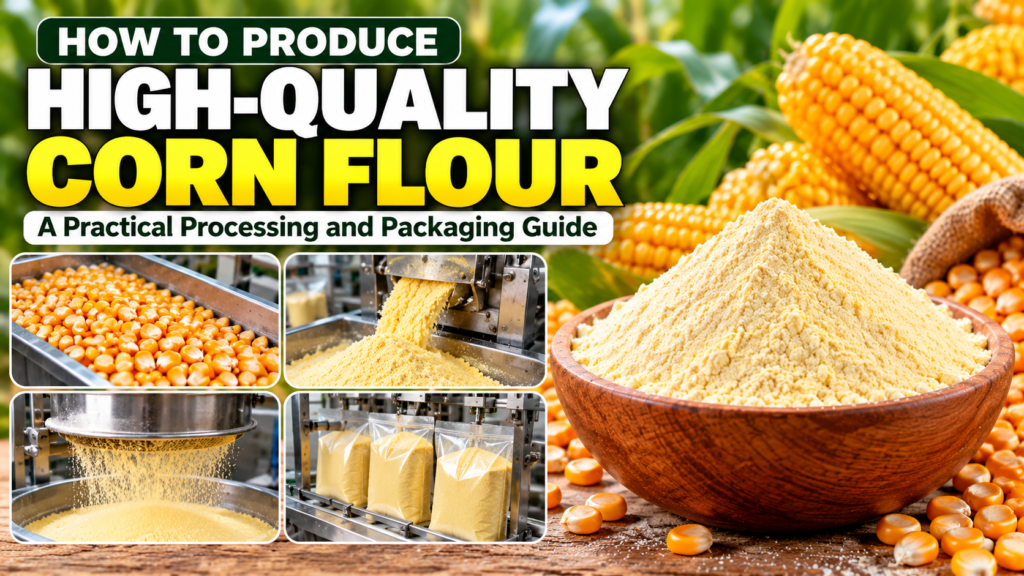
Corn flour is a finely milled product made from clean, dried maize kernels. It is widely used in baking, snacks, porridge, thickening, swallow meals, breakfast products and many other food applications.
Producing high-quality corn flour requires careful selection of sound maize, proper cleaning, moisture control, drying, milling, sieving and hygienic packaging. The final quality depends heavily on the cleanliness of the raw grain, the dryness of the maize before milling and how well the flour is protected from moisture after production.
Poor processing can lead to mould, insect infestation, off-flavours, rancidity, caking and reduced shelf life.
This guide explains the practical steps for producing clean, smooth and commercially acceptable corn flour suitable for household use, retail packaging and small-scale food processing.
1. Selecting Good Maize
Choose mature, dry maize kernels that are clean and free from mould, insect damage, stones, dust and foreign materials.
Avoid grains with musty odour, visible fungal growth or excessive discoloration because poor-quality maize will reduce the quality and safety of the finished flour.
The maize should be properly dried before storage and processing.
2. Cleaning and Sorting the Maize
Remove stones, chaff, broken cobs, damaged grains and other foreign materials.
Cleaning can be done manually or with suitable grain-cleaning equipment such as sieves, aspirators or destoners.
Proper cleaning protects the milling equipment and improves the colour, flavour and purity of the finished flour.
3. Drying and Moisture Control
Before milling, make sure the maize is sufficiently dry.
If the grains contain too much moisture, dry them further using a clean drying floor, solar dryer or controlled mechanical dryer.
Low and uniform moisture helps improve milling efficiency, reduces caking and lowers the risk of mould growth during storage.
4. Conditioning the Maize
For some milling systems, especially when producing a smoother and more uniform flour, the cleaned maize may be conditioned before milling.
Conditioning involves carefully adjusting the grain moisture so the bran and germ separate more easily from the starchy endosperm. This can improve flour colour and milling performance.
Do not add excessive water. If conditioning is used, allow enough time for the moisture to distribute evenly through the grain before milling.
5. Milling the Maize
Mill the cleaned and properly dried maize using a suitable hammer mill, plate mill or other food-grade milling machine.
The aim is to produce a fine, uniform flour without excessive heat build-up. Too much heat during milling can affect flavour and may reduce product quality.
For a finer commercial flour, the maize may be passed through the mill more than once, depending on the equipment and desired particle size.
6. Sieving and Grading
Pass the milled corn flour through a clean food-grade sieve to remove coarse particles, bran fragments and other oversized material.
A fine and uniform particle size improves texture, appearance and cooking performance.
Any coarse material can be returned to the mill and processed again to improve recovery and consistency.
7. Cooling the Flour
After milling and sieving, allow the flour to cool completely before packaging.
Do not package warm flour because trapped heat can lead to condensation inside the package, which may encourage caking, mould growth and reduced shelf life.
Spread the flour in a clean, protected area or use suitable cooling equipment until it reaches room temperature.
8. Optional Degerming for Improved Shelf Life
For some commercial corn flour products, removing part of the germ before fine milling can help improve storage stability.
The germ naturally contains more oil than the starchy portion of the maize. If too much germ remains in the flour, the oil may become rancid during prolonged storage, especially under warm conditions.
Degerming is optional and depends on the type of corn flour you want to produce, the milling system available, and the expected shelf life.
9. Packaging the Corn Flour
After the flour has cooled completely, package it immediately in clean, food-grade, moisture-resistant packaging.
Suitable options include laminated pouches, sealed polyethylene bags, or other approved barrier materials that protect the flour from moisture, insects, dust, odours and contamination.
The package should display important information such as the product name, net weight, batch number, production date, best-before or expiry date, storage instructions and manufacturer details.
10. Storage of Packaged Corn Flour
Store packaged corn flour in a cool, dry and well-ventilated area away from direct sunlight, water, chemicals and strong-smelling materials.
Keep the bags or pouches off the floor and away from walls where possible to reduce moisture exposure and make inspection easier.
Good storage conditions help maintain flavour, colour, texture and shelf stability.
11. Quality Control Checks
For consistent commercial quality, regularly inspect the corn flour for:
clean cream or light-yellow appearance
fine and uniform particle size
absence of insects and foreign matter
absence of mould or unusual odour
low moisture and good flowability
no excessive caking
properly sealed packaging
acceptable taste and cooking performance
Raw maize should also be checked carefully for signs of mould and poor storage before processing.
Conclusion
Producing high-quality corn flour requires careful control from maize selection through cleaning, drying, conditioning, milling, sieving, cooling, packaging and storage.
The best product should be clean, fine, free-flowing, properly dried and protected from moisture and contamination. By maintaining good hygiene, controlling moisture and using suitable packaging, processors can produce commercially acceptable corn flour for household, retail and food-processing applications.
You may also read our guide on how to produce high-quality instant yam flour for more practical information on drying, milling, sieving and packaging flour products.