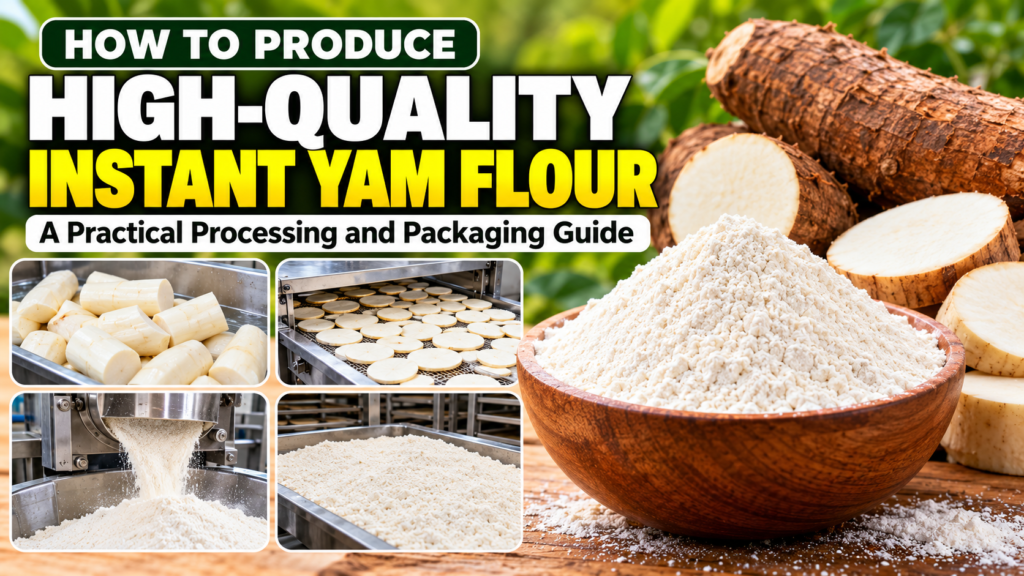
Instant yam flour is a convenient processed yam product used for preparing smooth yam meals quickly with less cooking time and effort. It is widely consumed in homes, restaurants and food-service businesses and can also be packaged for retail distribution.
Producing high-quality instant yam flour requires careful selection of healthy yam tubers, proper peeling and washing, controlled slicing, blanching or pre-treatment, efficient drying, fine milling and moisture-resistant packaging.
The quality of the finished flour depends greatly on controlling discoloration, moisture, contamination and particle size during processing. Poor handling can result in dark colour, unpleasant flavour, mould growth, caking and reduced shelf life.
This guide explains the practical steps for producing clean, smooth and commercially acceptable instant yam flour suitable for small-scale and commercial food processing.
1. Selecting Good Yam Tubers
Choose mature, healthy yam tubers that are firm and free from rot, mould, severe bruising or insect damage.
Avoid badly damaged or spoiled tubers because they can affect the colour, flavour and keeping quality of the finished flour.
Process the yams as soon as possible after selection to reduce deterioration and maintain good product quality.
2. Peeling and Washing the Yam
Peel the yam tubers carefully to remove the outer skin and any damaged portions.
Wash the peeled yam thoroughly with clean potable water to remove dirt, soil, peel residues and other contaminants.
Use clean food-grade equipment and maintain good hygiene throughout processing because contamination at this stage can reduce product quality and shelf stability.
3. Slicing the Yam
Cut the washed yam into thin, uniform slices using a clean knife or mechanical slicer.
Uniform slices help ensure even heat treatment and drying. Thick or uneven slices may dry slowly and can retain excess moisture.
Process the sliced yam immediately because prolonged exposure to air may cause enzymatic browning and discoloration.
4. Pre-Treating the Yam Slices
To reduce browning and improve the colour of the finished flour, the yam slices should be pre-treated immediately after slicing.
A common method is to keep the slices briefly in clean water containing an approved food-grade anti-browning treatment such as citric acid or another permitted processing aid. Use only levels allowed by your local food regulations.
Do not soak the slices for unnecessarily long periods, because excessive soaking can cause loss of soluble nutrients and may affect flavour.
5. Blanching the Yam
Blanching helps reduce enzymatic activity, improves colour stability and prepares the yam for more uniform drying.
Place the yam slices in hot water or steam for a short, controlled period until they are partially softened but not fully cooked.
After blanching, drain the slices thoroughly and allow excess surface water to run off before drying.
Avoid over-blanching because excessive heat can make the slices too soft, increase drying time and negatively affect the texture of the finished flour.
6. Drying the Yam Slices
Arrange the treated yam slices in a thin, even layer on clean food-grade drying trays.
Dry using a cabinet dryer, dehydrator, solar dryer or another hygienic drying system with controlled airflow and temperature. Moderate drying temperatures help preserve colour and reduce scorching.
Dry the slices until they are crisp, brittle and sufficiently low in moisture for safe milling and storage.
Proper drying is essential because inadequately dried yam can develop mould, unpleasant odour, caking and poor shelf stability.
7. Milling the Dried Yam
Allow the dried yam slices to cool completely before milling.
Mill them using a clean, dry hammer mill, plate mill or other suitable food-processing grinder until a fine flour is obtained.
Avoid excessive heat build-up during milling because it can affect flavour, colour and product quality.
For a smoother instant product, the flour may be milled more finely and passed through a suitable sieve before packaging.
8. Sieving and Grading the Yam Flour
Pass the milled yam flour through a clean, fine food-grade sieve to remove coarse particles, fibres and lumps.
A uniform particle size improves the appearance, mouthfeel and cooking performance of the finished product. Any oversized particles can be returned to the mill and processed again.
For a smoother commercial product, use a finer sieve and maintain the same specification from batch to batch.
9. Improving Instant Cooking Performance
If the product is intended to cook very quickly, the processing method should include enough heat treatment to partially gelatinize the yam starch before final drying and milling.
This can be achieved through controlled blanching, steaming or another suitable pre-cooking step before drying. The objective is to improve water absorption and reduce preparation time without creating a sticky or overly cooked product.
Processors should standardize the time and temperature used so that every batch gives similar reconstitution, texture and taste.
After milling and sieving, allow the flour to cool completely before packaging.
Pack immediately in clean, food-grade, moisture-resistant materials such as laminated pouches or properly sealed polyethylene-lined bags. The package should protect the flour from moisture, insects, dust, odours and contamination.
10. Packaging the Instant Yam Flour
After milling and sieving, allow the flour to cool completely before packaging.
Pack immediately in clean, food-grade, moisture-resistant materials such as laminated pouches or properly sealed polyethylene-lined bags. The package should protect the flour from moisture, insects, dust, odours and contamination.
Each pack should clearly display the product name, net weight, batch number, production date, best-before or expiry date, storage instructions and manufacturer information.
11. Storage and Quality Control
Store the packaged yam flour in a cool, dry and well-ventilated place away from direct sunlight, water and strong-smelling materials.
Regularly check the product for:
- clean cream or light-coloured appearance
- smooth and uniform texture
- absence of mould or foreign matter
- absence of unusual odour
- good water absorption and reconstitution
- low moisture and free-flowing condition
- properly sealed packaging
Good moisture control, hygienic processing and proper storage are essential for maintaining quality and shelf stability.
Conclusion
Producing high-quality instant yam flour requires careful control from raw-yam selection through peeling, slicing, pre-treatment, heat processing, drying, milling, sieving and packaging.
The best product should have good colour, smooth texture, pleasant flavour, quick preparation and consistent reconstitution. By standardizing each stage and maintaining good hygiene, processors can produce commercially acceptable yam flour suitable for homes, restaurants and retail markets.
You may also read our guide on how to produce high-quality cassava flour for more practical information on flour processing, drying, milling and packaging.